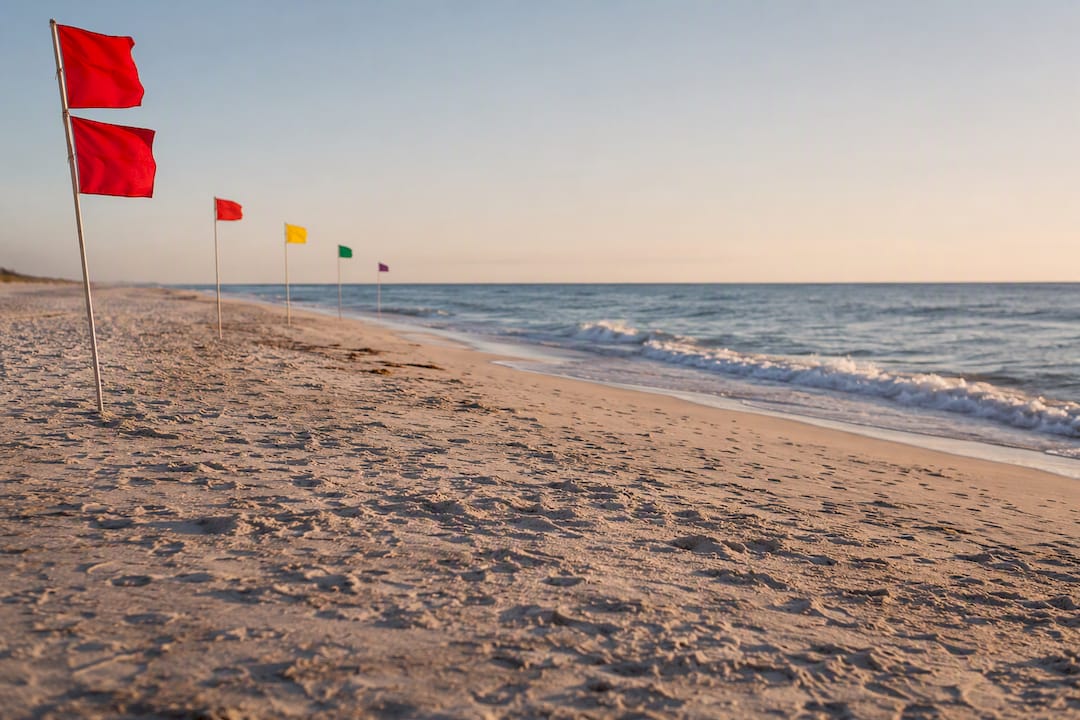
Panama City Beach is a popular Gulf Coast destination, and it’s generally safe for visitors who follow local guidance. Most of the risk here comes down to four things you can control: obeying beach flags and lifeguards, knowing how to escape a rip current, respecting Florida heat, and staying reachable for emergency alerts. Do these before you touch the sand:
-
Check the flag color at your beach access point before you get in the water
-
Learn the rip-current escape technique (swim parallel to shore, don’t fight the pull)
-
Plan around the heat index, not just the temperature on your phone
-
Text PCBFLAGS to 888777 and sign up for AlertBay before you leave Illinois
Key Takeaways
Panama City Beach safety comes down to reading the flags, respecting rip currents, planning around heat index, and staying signed up for official alerts before you arrive.
| Point | Details |
|---|---|
| Check flags every time | Flag colors change daily and are posted about one mile apart, so check at your own access point. |
| Know the rip-current technique | Swim parallel to shore to escape a rip current, or float and signal for help if you can’t break free. |
| Swim near lifeguards | Stations near Russell Fields City Pier staff April 1 through September 30, roughly 10 a.m. to 6 p.m. |
| Plan around heat index | Heat index can reach dangerously high levels locally, so hydrate on a schedule and reapply SPF 30+ sunscreen every two hours. |
| Sign up for alerts before travel | Text PCBFLAGS to 888777 and register for AlertBay to get real-time flag and emergency updates. |
| Choose a rental near the action | Panamacitybeachflorida’s vacation rentals put you close to lifeguarded beach access and easy hydration breaks. |
Where to Get Live Updates and Official Guidance
-
Flag Warning system details — City of Panama City Beach
-
Beach Safety and lifeguard hours — City of Panama City Beach
-
Rip current guidance and PCBFLAGS text alert — City of Panama City Beach
-
Emergency preparedness and AlertBay signup — City of Panama City Beach
-
Stay PCB Current Leave No Trace PDF — turtle and beach ordinance guidance
Table of Contents
-
Who Do You Call in an Emergency, and How Do You Prepare for Storms?
-
How Do You Protect Sea Turtles and Avoid Marine Life Hazards?
-
Do You Need to Worry About Public Health Conditions During Your Visit?
What Do the Panama City Beach Flag Colors Mean?
The flag system is your fastest safety read on any given day, and it’s not optional trivia. Panama City Beach flies five colors: Double Red (water closed to the public), Red (high hazard, strong surf or currents), Yellow (medium hazard, moderate surf), Green (low hazard, calm conditions), and Purple (dangerous marine life present). Swimming during a Double Red isn’t just risky. Ignoring it can lead to arrest, according to Bay County’s beach safety guidance.
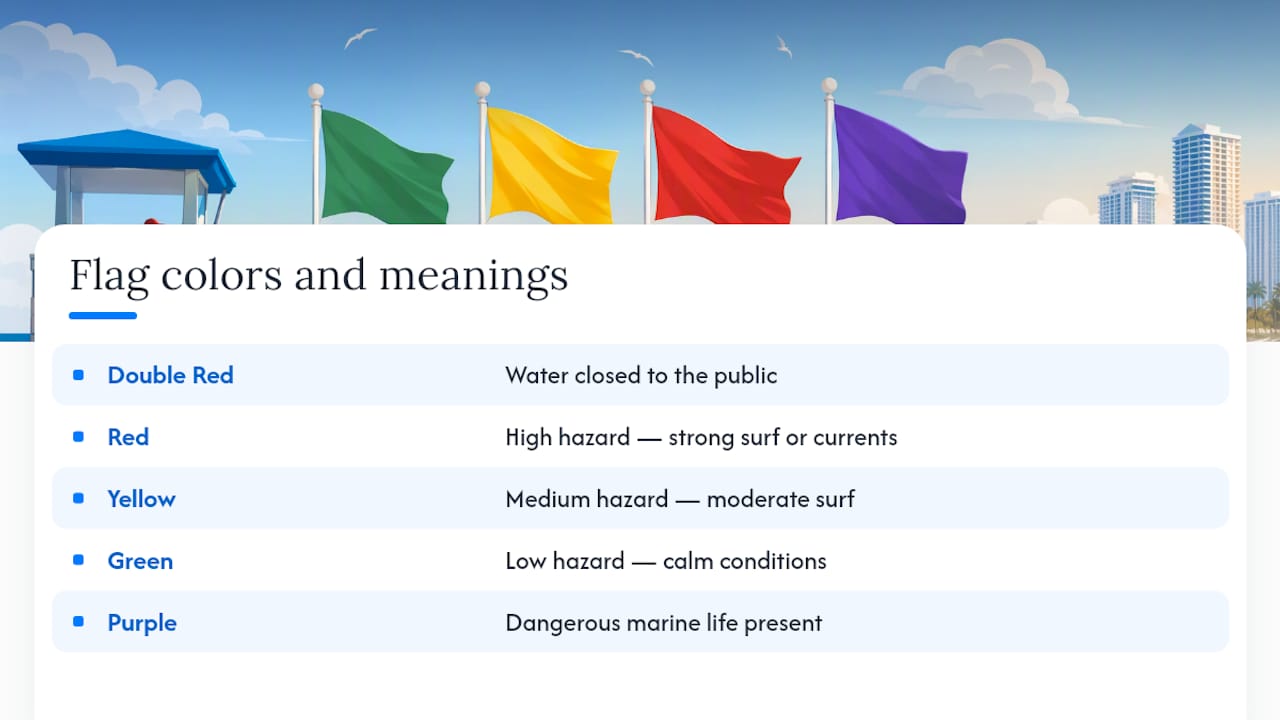
One detail catches out-of-state visitors every year: flags are posted roughly one mile apart, so the flag at your rental’s access point might not match the one half a mile down the beach. No flag flying doesn’t mean the water is safe. It usually means nobody has checked yet, so treat an empty flagpole as a reason to look harder at the surf, not a green light.
Before you even unpack in Illinois, text PCBFLAGS to 888777 for real-time flag status, a trick pulled straight from the city’s rip current page. For a plain-language breakdown of each color, Panamacitybeachflorida’s guide to beach flag colors is worth a bookmark before your trip.
How Do You Escape a Rip Current at Panama City Beach?
Rip currents are the Gulf’s most underestimated hazard. You’ll usually spot one as a channel of choppy, discolored, or foamy water cutting through the surf line, sometimes with a visible gap in the breaking waves. Here’s what to do if you’re caught in one:
-
Stay calm. Panicked swimming burns energy you’ll need.
-
Swim parallel to the shore, not toward it, until you feel the pull release.
-
Once free of the current, angle back toward the beach.
-
If you can’t escape, float or tread water and signal for help rather than fighting the current, guidance the city’s rip current resource spells out directly.
Lifeguard stations near Russell Fields City Pier operate April 1 through September 30, typically from 10 a.m. to 6 p.m., and the city recommends swimming close to these staffed towers rather than a quiet stretch of beach with nobody watching. Checking the Panama City Beach water temperature guide also helps you gauge swim conditions before you head out.
Pro Tip: Never let kids swim unsupervised, even in ankle-deep water. A sandbar can drop off fast, and a rip current can form closer to shore than you’d expect.
How Hot Does It Get, and How Do You Plan Around It?
Air temperature alone won’t tell you what your body is actually dealing with on the sand. The heat index, which factors in humidity, is the number that matters, and Panhandle heat events have pushed that figure into the 112 to 115 degree range, according to local news coverage of a recent heat advisory. Check the forecast before you leave your rental, not after you’re already sweating on the boardwalk.
Build hydration into your day like it’s a scheduled activity, not an afterthought. Drink water regularly, keep an insulated cooler with chilled bottles nearby, and consider electrolyte drinks if you’re active in the sun for hours. Go easy on alcohol during peak heat since it accelerates dehydration. Thirst shows up late, well after your body already needs fluids.
Sunscreen matters just as much:
-
Use broad-spectrum SPF 30 or higher
-
Apply about one ounce (a shot glass full) for full adult coverage
-
Reapply every two hours, and immediately after swimming
-
Pack a rash guard or wide-brim hat for extra midday protection
If you can, shift beach time earlier or later in the day and check when to visit Panama City Beach to avoid the harshest heat windows entirely.
Is It Safe to Leave Belongings on the Beach at Night?
Panama City Beach enforces a local rule that surprises a lot of first-time visitors: anything left unattended between 7 p.m. and 7 a.m. can legally be disposed of. That’s both a theft-prevention issue and a turtle-protection measure, since abandoned chairs, tents, and coolers can block nesting sea turtles.
A few habits keep your trip smoother:
-
Bring everything back to your rental before evening, rather than leaving gear “just for tonight”
-
Use lockable storage in your vehicle or condo for valuables like phones, wallets, and passports
-
Turn off balcony lights and close blinds facing the beach after dark to avoid disorienting hatchlings
-
Skip flashlights and phone lights pointed toward the water during nesting season
-
Never swim after drinking, and check posted rules before public drinking, since open containers aren’t allowed everywhere on the beach
Who Do You Call in an Emergency, and How Do You Prepare for Storms?
Save these numbers in your phone before you cross the state line:
-
911 for any life-threatening emergency
-
850-233-5000 for non-emergency Panama City Beach police matters
-
850-233-5120 for the Panama City Beach Fire Department
Beyond the phone numbers, sign up for AlertBay before your trip. It pushes time-sensitive alerts by phone, text, or email for severe weather, evacuations, and boil-water notices. Bay County also maps evacuation zones A through D, so it’s worth knowing which zone your rental sits in the moment you book.
If a storm or hurricane watch comes up during your stay:
-
Follow official evacuation instructions immediately, don’t wait to see how bad it gets
-
Pack medications, identification, and essential documents first
-
Boil water for drinking if a boil-water notice is issued, and keep following it until officials rescind the notice
-
Know your evacuation route in advance; Panamacitybeachflorida’s guide to getting around Panama City Beach is a useful reference if you don’t have a car
How Do You Protect Sea Turtles and Avoid Marine Life Hazards?
Sea turtle protection here isn’t just an environmental nicety, it’s baked into local ordinances tied to nighttime lighting. Dim or turn off any light facing the beach after dark, close your rental’s blinds, and never point a flashlight or phone light toward the water during nesting and hatchling season, which runs through the warmer months. Disoriented hatchlings that wander toward artificial light instead of the Gulf rarely survive.
A purple flag means dangerous marine life, jellyfish blooms or occasional shark sightings, and it’s a stay-out-of-the-water signal just like red or double red. If you spot an injured turtle, a nest disturbance, or a wildlife concern, call 850-233-5000, per the city’s Leave No Trace guidance.
What Should Be in Your Beach Bag Before You Head Out?
Pack once, use every day of your trip:
-
Reusable water bottle plus electrolyte packets
-
SPF 30+ sunscreen and a wide-brim hat
-
Rash guard or light cover-up
-
Small first-aid kit (bandages, antihistamine, aloe)
-
Portable phone charger
-
Emergency numbers saved offline, in case of weak signal
-
Insulated cooler bag for chilled water
Each morning, run the same quick routine: check the flag color, pick a spot near a lifeguard station, schedule a shade or hydration break every 30 to 45 minutes, and gather all belongings before you leave for the evening.
Can You Swim Safely at Night or Outside Lifeguard Hours?
Lifeguards staff their towers roughly April through September, 10 a.m. to 6 p.m. Outside that window, and especially after dark, you’re swimming without a safety net. Rip currents don’t clock out when the lifeguards do, and visibility drops fast once the sun goes down, making it much harder to spot a current, a sandbar drop-off, or another swimmer in trouble.
If you swim outside staffed hours, treat it as a higher-risk decision, not a casual dip. Never swim alone, keep it shallow enough to stand, and skip alcohol beforehand entirely. A current that’s manageable at 2 p.m. with a lifeguard watching becomes a different problem at 9 p.m. with nobody around to help.
Families with kids should be especially cautious about early-morning or after-hours swims before lifeguards arrive. The beach looks calm at sunrise, but tidal changes overnight can create sandbars and currents that weren’t there the evening before. If you’re set on a sunrise walk or swim, stick to wading depth and keep everyone within arm’s reach.
The safest rule for outside-hours swimming: if you wouldn’t feel comfortable letting your kids swim there without a lifeguard in daylight, don’t do it yourself in the dark either. Save the deeper water for the staffed window near Russell Fields City Pier, and use early mornings and evenings for walking the shoreline instead.
Is Panama City Beach Safe From a Crime Standpoint?
Most visitor safety issues in Panama City Beach come down to petty theft, unattended valuables on the sand, cars left unlocked, purses forgotten on a beach towel, rather than violent crime. The steps that cut your risk are simple and mirror what you’d already do in any tourist-heavy area back home.
Keep valuables out of sight in your vehicle, use your rental’s lockable storage for passports and electronics, and avoid carrying large amounts of cash to the beach. If you’re staying in a condo or beach house, confirm the door locks and any keypad codes on arrival rather than assuming they’re set correctly. Popular strips near Pier Park and the main beach accesses draw more foot traffic, which cuts both ways: more eyes around, but also more opportunity for a bag left unattended to disappear quickly.
Basic personal safety habits go a long way here. Stick to well-lit, populated areas at night, let someone know your plans if you’re heading out solo, and keep your phone charged in case you need to call 850-233-5000 for a non-emergency police matter. If something feels off, whether it’s a person, a situation, or a stretch of beach that’s suspiciously empty, trust that instinct and move to a busier area.
What Are the Safety Rules for Boating and Water Sports?
Panama City Beach draws boaters, jet skiers, and parasail operators in heavy numbers, especially in peak summer months, and that traffic requires the same discipline you’d expect from any Gulf waterway. Anyone renting a boat or personal watercraft should confirm the vessel carries required safety gear, life jackets for every passenger, a sound-producing device, and navigation lights if you’re out near dusk.
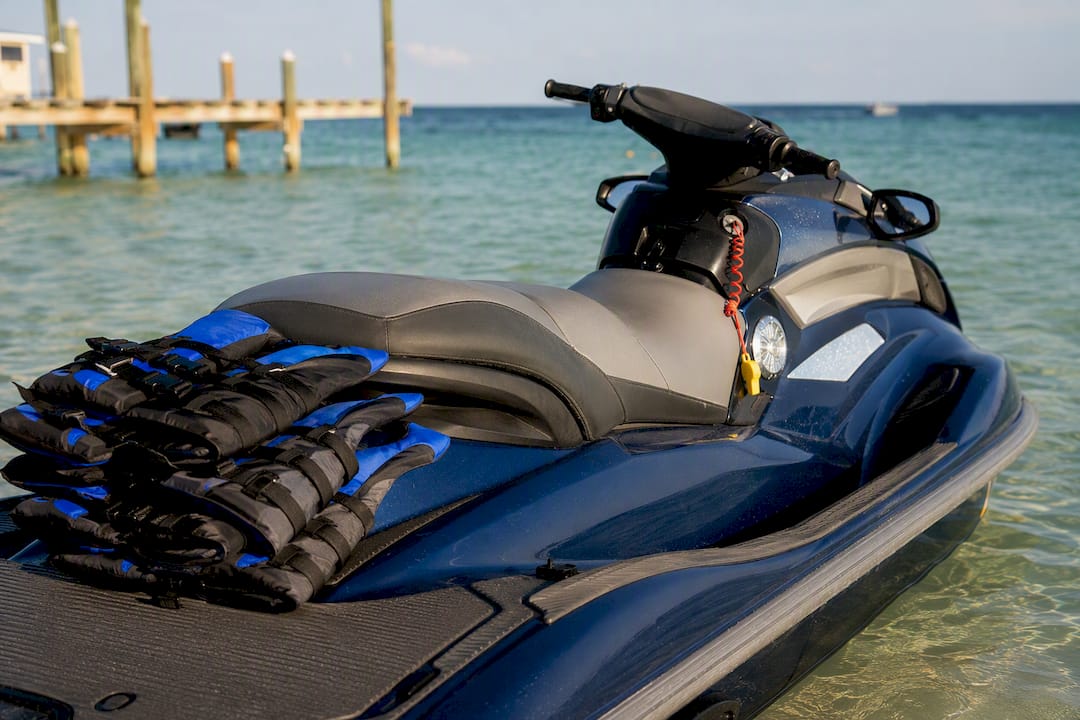
Life jackets aren’t just for weak swimmers. Conditions on open Gulf water change faster than they do close to shore, and a sudden gust or wake from a passing boat can knock even confident swimmers off balance. Renters unfamiliar with local boating regulations should review a Florida boating safety checklist before heading out, since state rules cover everything from required safety equipment to age restrictions on operating personal watercraft.
Watch the weather constantly when you’re on the water. Gulf storms build quickly, and a clear morning can turn choppy by early afternoon. If wind picks up while you’re set up with a beach umbrella or canopy, lower or secure it right away. Unsecured shade structures can become airborne hazards in gusty conditions, injuring people well beyond your own group. Keep a safe distance from swimmers when operating any watercraft, and never mix alcohol with boating or jet ski use. Florida treats operating a vessel under the influence the same way it treats drunk driving.
Do You Need to Worry About Public Health Conditions During Your Visit?
Panama City Beach doesn’t currently require any special health precautions tied to COVID-19 or similar public health advisories for visitors. Local venues, restaurants, and rental properties operate under standard Florida guidelines, and there are no mandated mask requirements or capacity restrictions in effect.
That said, basic health awareness still applies to any beach trip, especially one involving crowded attractions, shared pools, or busy restaurants during peak season. If you’re traveling with someone who’s immunocompromised or particularly vulnerable to illness, it’s worth checking current advisories from the Florida Department of Health shortly before your trip, since guidance can shift with seasonal illness patterns. Standard travel hygiene, washing hands regularly, staying hydrated to support your immune system, and getting adequate rest, matters more in a high-heat, high-activity environment than most people realize, since heat stress alone can weaken your resistance to common illnesses.
If anyone in your group develops symptoms of heat illness, gastrointestinal upset from seafood, or anything else during the trip, most rental areas near Panama City Beach have urgent care clinics within a short drive, a detail worth noting before you need it rather than after.
A Local Perspective on Staying Safe at Panama City Beach
The flags, the text alerts, the lifeguard hours, none of it works if you skip it out of vacation laziness. What separates a smooth trip from a scary one usually isn’t bad luck. It’s someone deciding the purple flag “probably doesn’t apply to us.” Panamacitybeachflorida covers more than 27 miles of coastline, and that scale is exactly why the local systems exist: use them.
— Joe
Why a Beachfront Rental Makes Safety Easier, Not Just More Comfortable
A beachfront rental does more than upgrade your view. It puts a refrigerator full of cold water steps from the sand, shade and air conditioning one elevator ride away, and easy access to lifeguarded stretches without a long walk in peak heat. That proximity matters when the heat index climbs past 110 and you need a break every 30 to 45 minutes.
Panamacitybeachflorida’s vacation rental listings let you filter for properties near lifeguarded beach access points, so you’re not gambling on distance when conditions change fast. Booking directly with owners also means you can ask specific questions before arrival, like which beach access is closest, or whether the unit has a cooler for beach days. Browse available beachfront condos and homes now, and lock in a base that keeps safety simple for the whole trip.
Sources
-
Prepare for an emergency, hurricane or storm | Panama City Beach
-
Extreme heat in the Panhandle: how visitors and firefighters stay safe
Recommended
About the Author
Joe Godar of the PanamaCityBeachFlorida.com Editorial Team creates destination guides, vacation-planning resources, and local travel content focused on Panama City Beach, Florida.
Our team researches local beaches, vacation rental trends, family activities, restaurants, attractions, events, and direct-booking best practices. Every guide is created to help travelers plan more confidently, experience the best of Panama City Beach, and avoid unnecessary third-party guest service fees.
PanamaCityBeachFlorida.com is part of the Emerald Coast by Owner marketing family, connecting travelers directly with verified vacation rental hosts throughout the Gulf Coast since 2016.
This article was reviewed for accuracy and updated using local destination research and current Panama City Beach vacation rental market insights.