TL;DR:
- Best overall: September–October and late May–early June offer warm Gulf water, fewer crowds, and better rental rates.
- Warmest water: July and August, with Gulf temperatures reaching the low 80s°F.
- Best for families: Summer offers full activity schedules but also peak crowds and prices.
- Best budget months: November–February have the lowest rates and quietest beaches.
- Book early: Reserve summer and Spring Break stays 4–6 months ahead.
- Hurricane season: June 1–November 30; consider appropriate travel insurance and monitor forecasts.
Late May through early June and September through October are the best times to visit Panama City Beach for most travelers. Gulf water temperatures stay comfortably warm, crowds thin out compared to peak summer, and rental rates drop noticeably. Local guides call these shoulder windows the sweet spots that sidestep both Spring Break chaos and the full heat of July.
Your ideal window depends on what you want from the trip:
-
Families with school-age kids: June through August offers the warmest water and full activity schedules, though crowds and prices peak.
-
Budget or quiet seekers: January and February bring the lowest rates and fewest people, though Gulf water dips into the 60s °F and some attractions run reduced hours.
-
Warm-water swimmers: July and August deliver Gulf temps in the low 80s °F, the warmest of the year.
-
Best overall value: Late May through early June and September through October hit the sweet spot of warm water, manageable crowds, and better rental pricing.
Why shoulder seasons beat both peak and off-season for most visitors:
-
Gulf water stays above 75 °F through late October, comfortable for swimming without the summer crowds.
-
Rental rates and availability improve significantly compared to June, July, and August.
-
Afternoon storm activity is lower in May and October than during the peak summer convective season.
Before you book, check the local event calendar and review NOAA forecasts — both can shift your ideal dates significantly.
Pro Tip: If you’re driving from Mississippi, the shoulder-season windows also mean lighter traffic on US-98 and I-10 through the Panhandle, which makes the drive noticeably more pleasant.
Key Takeaways
The best time to visit Panama City Beach is the shoulder seasons of late May through early June and September through October, when warm Gulf water, manageable crowds, and better rental rates combine for the strongest overall experience.
| Point | Details |
|---|---|
| Best overall timing | Late May through early June and September through October offer warm water, fewer crowds, and better rates. |
| Warmest water | July and August bring Gulf temps to the low 80s °F, best for swimmers who prioritize water temperature. |
| Hurricane season | June 1 through November 30 overlaps peak and shoulder travel; buy storm-coverage travel insurance and monitor NHC advisories. |
| Book ahead for peak | Summer and Spring Break rentals book out 4–6 months in advance; shoulder season needs 2–3 months. |
| Panamacitybeachflorida rentals | Search beachfront condos, family homes, and pet-friendly properties with direct booking at Panamacitybeachflorida. |
Table of Contents
What does each season feel like at Panama City Beach?
Panama City Beach has four distinct seasons, but they don’t behave the way seasons do further north. Here’s what each one actually delivers.
Spring (March through May)
Spring starts crowded and ends beautifully. March brings Spring Break waves of college students, which drives up prices and fills every parking lot. By April and May, the crowds thin, Gulf visibility clears, and water temperatures climb from the mid-60s into the low 70s °F. Tripbase recommends April through May as a shoulder season that combines warm water, clearer Gulf visibility, fewer crowds, and better rates.
Pros: Warming water, longer days (roughly 13 hours of daylight by May), full activity schedules, improving rates after Spring Break. Cons: March is chaotic and expensive; early April can still feel crowded.
Summer (June through August)
Summer is peak season, full stop. Gulf water hits the low 80s °F, every attraction runs at full capacity, and the beach is packed from Memorial Day through Labor Day. Daylight stretches to nearly 14 hours in June, which means long beach days and evening boat tours. The trade-off: rates are highest, availability tightest, and afternoon thunderstorms roll in frequently.
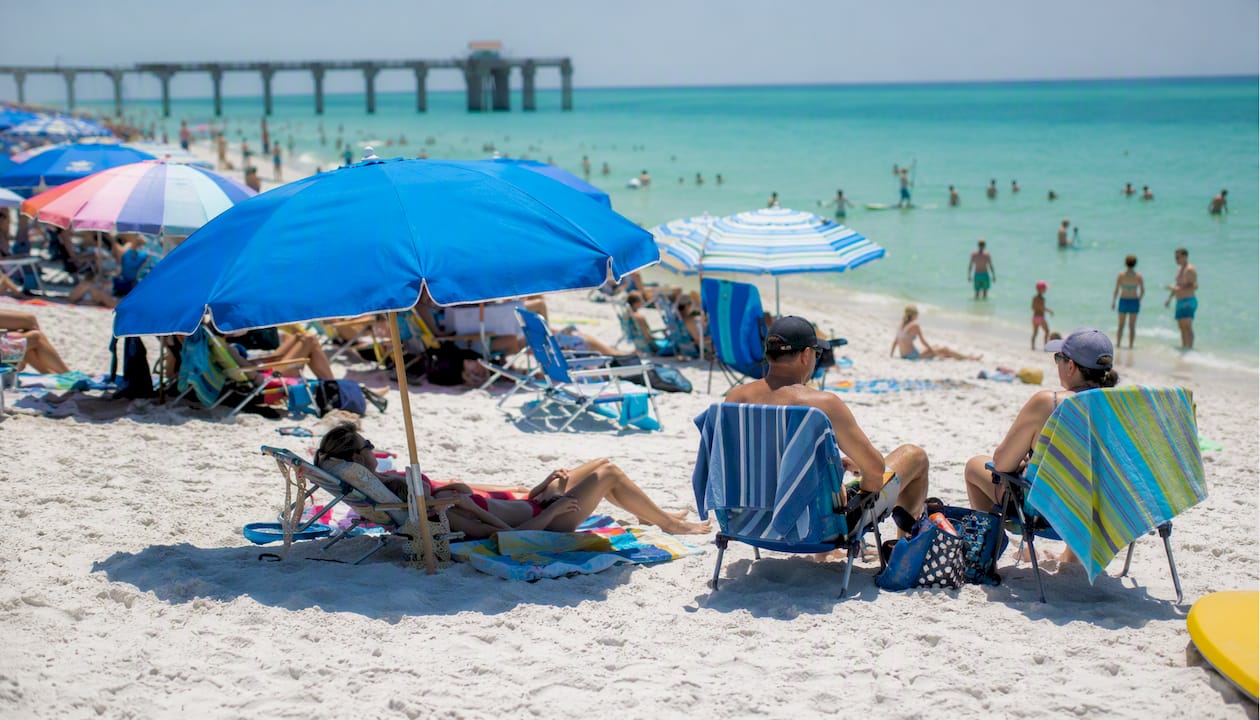
Pros: Warmest water of the year, all attractions open, long daylight hours, great for families. Cons: Highest prices, heaviest crowds, frequent afternoon storms, hurricane season begins June 1.
Fall (September through November)
Fall is the insider’s pick. After Labor Day, crowds drop sharply while Gulf water stays warm well into October, often holding in the low 70s °F. September and October offer some of the best conditions of the year. By November, water cools into the 60s °F and some boat operators begin scaling back hours.
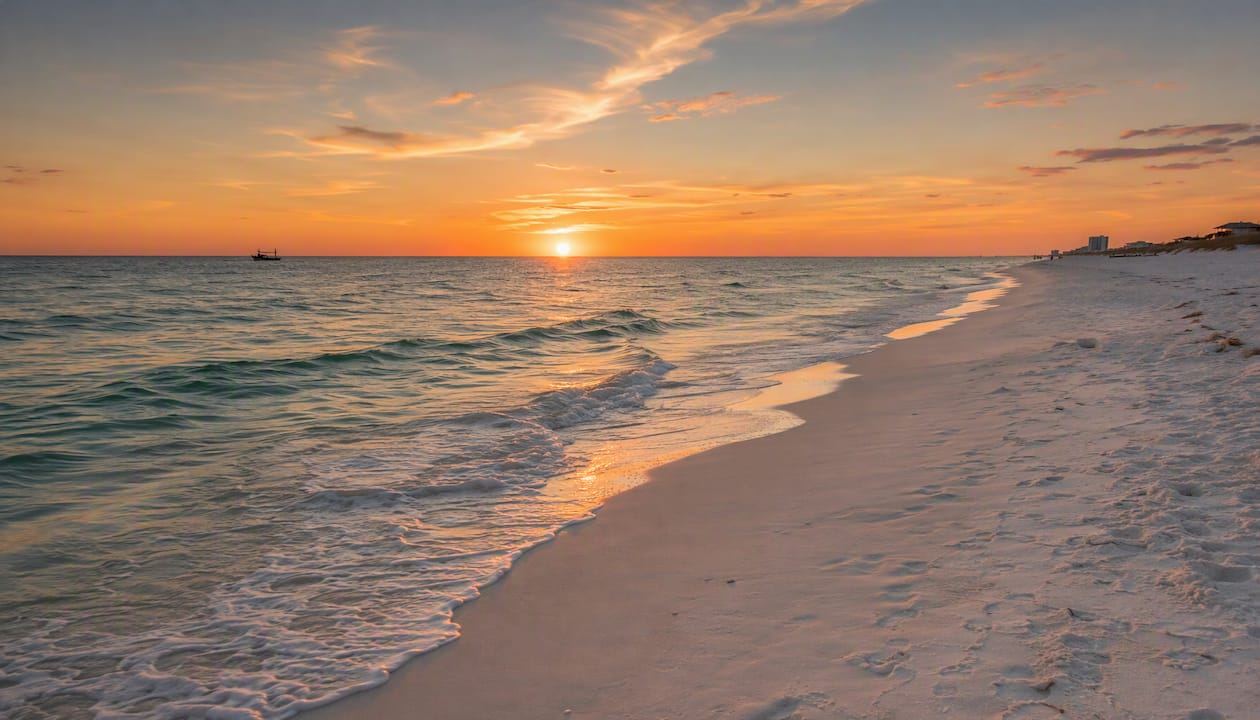
Pros: Warm water through October, far fewer crowds, lower rates, pleasant air temps in the mid-70s to low 80s °F. Cons: Hurricane season runs through November 30; some festival weekends in October can spike crowds briefly.
Winter (December through February)
Winter is the true off-season. U.S. News Travel notes that November through February brings the lowest rates but cooler water and some attraction closures or reduced hours. Air temperatures average in the low-to-mid 60s °F, Gulf water dips into the high 50s to low 60s °F, and daylight shrinks to about 10 hours in December.
Pros: Lowest prices of the year, very quiet beaches, great for fishing and long walks. Cons: Too cold for most swimmers, limited activity schedules, some restaurants and tour operators close or cut hours.
Pro Tip: Fall festival weekends in October can briefly spike crowds to near-summer levels. Check the Panama City Beach events calendar before assuming October will be quiet.
Month-by-month weather, water temps, and crowd levels
The table below combines climate data from the National Weather Service and travel guides including Tripbase and U.S. News Travel. Always verify current forecasts before you travel — conditions vary year to year.
| June | — | low 70s °F | 80 | — | 14 | High | | July | — | — | low 80s °F | 7.5 | — | High | | August | — | — | low 80s °F | 7.2 | 13 | High | | September | 86 | 70 | 79 | 6.0 | 12.5 | Medium |
| October | 78 | 60 | 73 | 4.0 | —.5 | Medium-Low | | November | — | 50 | 66 | 3.5 | 10.5 | Low | | December | 62 | 44 | 61 | — | 10 | Low |
July and August produce the warmest Gulf water of the year, typically reaching the low 80s °F — ideal for swimming, snorkeling, and paddleboarding. October still holds water temps around the low 70s °F, which most swimmers find comfortable.
July is also the rainiest month, with afternoon convective storms common across the Florida Panhandle. These storms usually pass quickly, but they can disrupt boat tours and beach plans for an hour or two each afternoon.
A few month-level notes worth keeping in mind:
-
January and February: Quiet and affordable, but Gulf water in the high 50s to low 60s °F rules out comfortable swimming for most people. Good for fishing, long beach walks, and seafood dining without the wait.
-
March: Spring Break dominates. Expect packed beaches, elevated prices, and limited rental availability if you haven’t booked months ahead.
-
April and May: Water clarity peaks in spring. River outflow and storm activity are lower than in summer, giving the Gulf its clearest emerald-green color.
-
June: Full summer begins. All attractions run at capacity, daylight peaks near 14 hours, and rates jump.
-
September and October: The shoulder season sweet spot. Crowds thin after Labor Day, rates improve, and Gulf water stays warm enough for comfortable swimming through most of October.
-
November: A transitional month. Water cools quickly, some operators cut hours, but air temps remain pleasant for beach walks and outdoor dining.
-
December: The quietest month of the year. Rates are at their lowest, and the beach has a peaceful, uncrowded feel that some travelers specifically seek out.
Which events and holidays cause the biggest crowd spikes?
Knowing the Panama City Beach crowd calendar before you book can save you real money and frustration. Several recurring events reliably push crowds and prices to peak levels even outside the traditional summer window.
High-impact crowd drivers by month:
-
March (Spring Break, weeks 2–4): The largest annual crowd event. College students from across the Southeast fill the beach for several weeks. Accommodation demand spikes sharply, and prices reflect it.
-
Memorial Day weekend (late May): Marks the unofficial start of summer. Expect heavy traffic and sold-out rentals near the beach.
-
4th of July week: One of the busiest weeks of the year. Fireworks, festivals, and family travel combine to fill every beachfront property.
-
Labor Day weekend (early September): The last major summer surge before crowds thin. Prices stay high through this weekend, then drop noticeably.
-
October motorcycle and music festivals: Events like the Thunder Beach Motorcycle Rally (held twice yearly, including a fall edition) draw large crowds to specific weekends. Check exact dates annually.
-
Fall seafood and arts festivals: Panama City Beach and nearby Panama City host seafood festivals and arts events in October and November that can briefly spike weekend crowds.
Tripbase notes that checking event calendars is critical because festival weekends can dramatically change crowd levels and accommodation demand even in months that are otherwise quiet.
Before you lock in flights or a rental, run through this checklist:
-
Check the official Panama City Beach events page for your target dates.
-
Search local news and the city’s tourism site for any motorcycle rallies, music festivals, or seafood events that overlap your stay.
-
Confirm with your property manager or rental platform whether any large events are scheduled nearby.
-
If you’re attending an event, book at least 3–4 months ahead. If you’re avoiding one, shift your dates by even 3–4 days to escape the worst of the surge.
Pro Tip: Shifting your arrival to a Tuesday or Wednesday instead of a Friday or Saturday during event weekends can mean the difference between a relaxed check-in and a two-hour traffic crawl on US-98.
What should you know about hurricane season and heavy rain?
The National Hurricane Center documents that Atlantic hurricane season officially runs June 1 through November 30. That window overlaps directly with the warmest and most popular travel months, including the shoulder seasons of late May and September through October.
This doesn’t mean you should avoid those months. It does mean you should plan with weather risk in mind.
Practical steps for hurricane-season travel:
-
Purchase travel insurance that specifically covers trip cancellation or interruption due to named storms. Standard policies often exclude hurricanes unless you add the coverage.
-
Book with flexible or refundable cancellation policies when possible, especially for stays in September and October.
-
Monitor NHC advisories and NWS local forecasts starting about a week before your trip and daily once you arrive.
-
Know your evacuation route in advance. Bay County Emergency Management publishes zone maps that are worth reviewing before you travel.
-
Have a backup plan for indoor activities if a storm watch is issued during your stay.
July is the rainiest month in the Panama City Beach area, with afternoon convective storms a near-daily occurrence during peak summer. These storms typically build in the early afternoon and pass within an hour or two, but they can interrupt boat tours, beach time, and outdoor dining. Scheduling water excursions for morning departures reduces the chance of a weather cancellation.
The Florida Department of Environmental Protection (Florida DEP) also publishes water quality and beach condition notices that are worth checking if you’re planning snorkeling or extended water activities during or after heavy rain events.
How far ahead should you book, and when do prices drop?
Booking timing matters as much as timing your visit. Getting the right window at the right price requires a different approach depending on the season you’re targeting.
Recommended booking windows:
-
Peak summer (June through August) and Spring Break (March): Book 4–6 months ahead for the best selection of beachfront condos and family homes. Popular properties sell out by February for summer stays.
-
Shoulder seasons (late May, September, October): 2–3 months ahead is usually sufficient, though the most desirable beachfront units go faster. Booking 10–12 weeks out gives you good options without overpaying.
-
Off-season (November through February): Last-minute bookings are often available and sometimes discounted, particularly for mid-week stays. Property managers are more willing to negotiate on longer stays during these months.
| Season | Book This Far Ahead | Best Tactic |
|---|---|---|
| Peak summer | 4–6 months | Lock in early; prices rise as summer approaches |
| Spring Break (March) | 4–5 months | Book by November for March stays |
| Shoulder (May, Sep–Oct) | 2–3 months | Flexible dates help; mid-week check-in saves money |
| Off-season (Nov–Feb) | 2–6 weeks | Last-minute deals common; negotiate longer stays |
A few tactics that consistently improve your outcome:
-
Travel mid-week. Checking in on a Tuesday or Wednesday instead of Saturday often unlocks lower nightly rates, especially in shoulder and off-season.
-
Stay longer. Many property managers offer weekly rate discounts that make a 7-night stay cheaper per night than a 4-night stay.
-
Use flexible date searches. Shifting your trip by even 3–4 days around a holiday weekend can cut rates noticeably.
-
Read cancellation policies carefully. Peak-season rentals often require non-refundable deposits 60–90 days out. Shoulder-season properties tend to offer more flexibility.
-
Check for budget-friendly options. Resources like the cheap condos guide can help you find well-priced units even during busier periods.
Pro Tip: For September and October stays, watch for mid-week openings that appear when other guests cancel. Property managers often discount these gaps rather than leave them empty, so checking availability 3–4 weeks before your trip can surface real deals.
What activities suit each season, and what should you pack?
Panama City Beach’s 27 miles of sugar-white sand and emerald-green Gulf waters support a wide range of activities year-round, but the season shapes what’s available and how enjoyable it will be.
Activities by season:
-
Spring (March–May): Snorkeling and diving benefit from the clearest Gulf visibility of the year, particularly in April and early May. Fishing charters run full schedules. Shell Island trips via shuttle are operating. Avoid March if you want a calm experience.
-
Summer (June–August): Peak season for parasailing, paddleboarding, dolphin tours, jet skiing, and waterpark visits. All activities and attractions run at full capacity. Morning boat departures are best to beat afternoon storms.
-
Fall (September–October): Excellent for fishing, kayaking, and beach walks. Water is still warm enough for swimming through most of October. Boat tours and Shell Island shuttles typically run through October, then begin scaling back in November.
-
Winter (November–February): Beach walks, fishing, golf, and waterfront dining remain enjoyable. Swimming is uncomfortable for most people. U.S. News Travel notes that some attractions and boat operators run reduced hours or suspend service entirely from November through February — always call ahead before planning your itinerary around a specific excursion.
Packing by season:
-
Spring: Light layers for evenings, reef-safe sunscreen, water shoes for Shell Island’s rocky areas, and a light rain jacket for occasional afternoon showers.
-
Summer: High-SPF reef-safe sunscreen (reapply every 90 minutes on the water), rash guards for extended swimming, insect repellent for evening outdoor dining, and a dry bag for electronics on boat trips.
-
Fall: A light fleece or hoodie for October evenings, sunscreen (UV is still strong), and a packable rain layer for any lingering storm activity in September.
-
Winter: A mid-weight jacket for evenings, comfortable walking shoes for beach walks, and layers you can shed during warm afternoon hours.
Pro Tip: Always call Shell Island shuttle operators and charter fishing companies at least a week before your trip during November through February. Some suspend operations entirely for weeks at a time, and their websites don’t always reflect current schedules.
Why the shoulder season is the smarter choice for most visitors
Most travel guides tell you to visit in summer because that’s when the water is warmest. That’s true, but it’s only part of the picture.
The shoulder seasons, late May through early June and September through October, consistently deliver a better overall experience for the majority of visitors. Gulf water temperatures in those windows sit in the mid-to-upper 70s °F through early June and hold in the low 70s °F through October, which is comfortable for swimming, snorkeling, and paddleboarding. You’re not giving up much on water temperature. What you’re gaining is significant: lower rental rates, easier access to popular restaurants, shorter waits at boat tour operators, and a beach that doesn’t feel like a parking lot.
The visitors who tend to regret their timing are the ones who booked peak summer without accounting for the daily afternoon storm pattern, the crowd intensity on US-98, and the premium pricing. September, in particular, surprises people. The Gulf is still warm, the sunsets are spectacular, and the beach has a relaxed pace that feels nothing like August.
One scheduling tip that repeat visitors use: start your stay on a Tuesday or Wednesday. Weekend arrivals bring the heaviest traffic and the most competition for check-in slots. A mid-week start gives you calmer roads, a smoother check-in, and often a better rate.
Find your perfect Panama City Beach vacation rental
Panamacitybeachflorida is the direct-booking marketplace for Panama City Beach vacation rentals, with beachfront condos, family-sized beach homes, and pet-friendly properties across all 27 miles of coastline. You can filter by property type, group size, and proximity to the water, and book directly with property owners and managers without third-party markups. Summer and Spring Break inventory moves fast, so locking in your dates early is worth it. For shoulder-season stays, you’ll find more flexibility, but the best beachfront units still go quickly. Search available rentals now to see what’s open for your target dates and compare options side by side.
Sources
These are the most reliable resources to check before and during your trip, each serving a specific planning need.
Recommended
-
Panama City Beach Vacation Rentals | Beachfront Condos & Homes
-
Panama City Beach Vacation Rentals | Homes, Condos, Things To Do
About the Author
Joe Godar of the PanamaCityBeachFlorida.com Editorial Team creates destination guides, vacation-planning resources, and local travel content focused on Panama City Beach, Florida.
Our team researches local beaches, vacation rental trends, family activities, restaurants, attractions, events, and direct-booking best practices. Every guide is created to help travelers plan more confidently, experience the best of Panama City Beach, and avoid unnecessary third-party guest service fees.
PanamaCityBeachFlorida.com is part of the Emerald Coast by Owner marketing family, connecting travelers directly with verified vacation rental hosts throughout the Gulf Coast since 2016.
This article was reviewed for accuracy and updated using local destination research and current Panama City Beach vacation rental market insights.