TL;DR:
- Check the flag daily: Beach conditions can change quickly with surf, weather, and rip currents.
- Green: Low hazard, but normal caution is still required.
- Yellow: Moderate surf or currents; use extra caution.
- Red: High hazard with dangerous surf or currents.
- Double red: Water is closed to the public—do not enter.
- Purple: Dangerous marine life may be present.
- Stay informed: Check current flags before swimming and follow lifeguard and local safety instructions.
- Remember: Even strong swimmers should never underestimate Gulf rip currents.
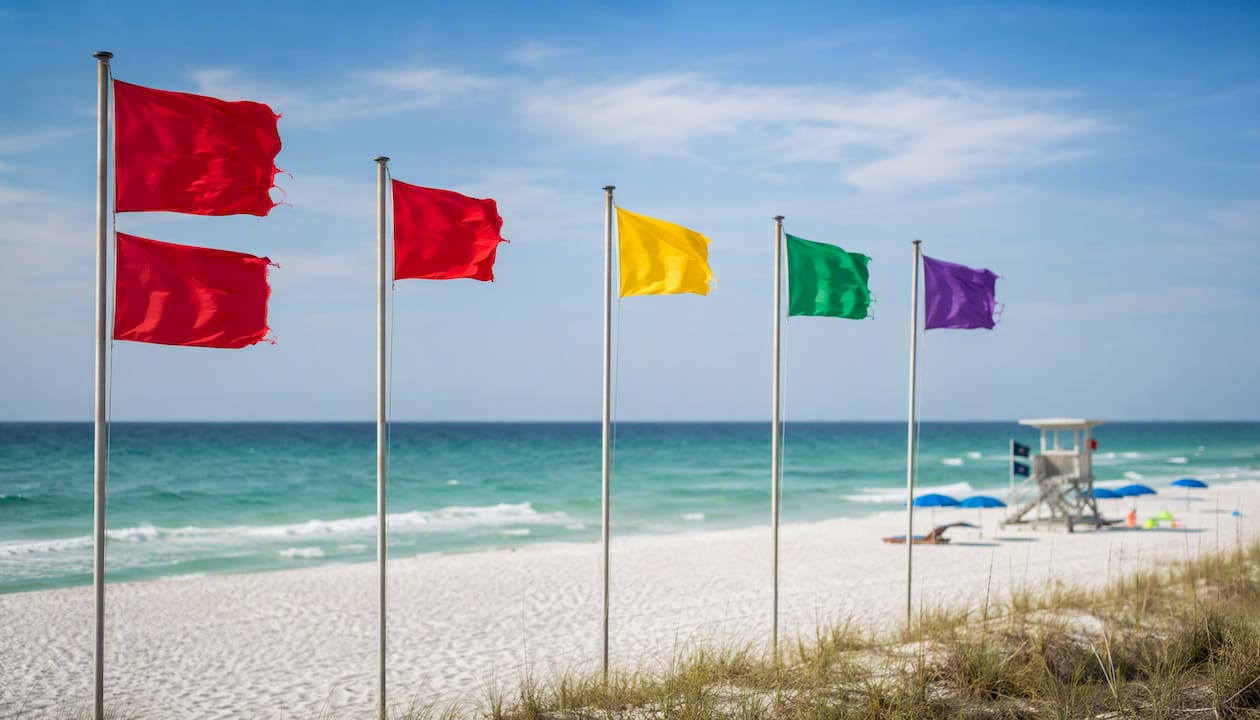
The beach flags at Panama City Beach tell you exactly what the Gulf is doing right now. Double red means the water is closed to the public; single red means high hazard; yellow means medium hazard; green means low hazard; and purple means dangerous marine life is present. Before you step into the water, here is what you need to do:
-
Find the nearest flag pole. Flags are posted at public access points along the coast, roughly one mile apart.
-
Swim near a lifeguard. Panama City Beach Fire Rescue / Surf Rescue Specialists patrol the beach and are your first line of help.
-
Sign up for text alerts. Text PCBFLAGS to 888777 to get flag updates sent directly to your phone.
Double red is not a suggestion. Entering the water during double-red conditions can result in a $500 fine for a first offense and $1,000 for a second offense under city ordinance.
Key Takeaways
The beach flag system at Panama City Beach is a legally enforced safety directive, and knowing each color before you reach the water is the single most important preparation you can make.
| Point | Details |
|---|---|
| Double red = water closed | Entering the water during double red risks a $500 first-offense fine and $1,000 for a second. |
| Text alerts are the fastest check | Text PCBFLAGS to 888777 for real-time flag updates sent directly to your phone. |
| Flags change during the day | Conditions can shift from yellow to red by afternoon; recheck before each swim session. |
| No flag does not mean safe | Absence of a flag at your spot may mean you are between access points, not that the water is clear. |
| Rip currents drive flag decisions | Calm-looking water can still carry a red flag; swim parallel to shore if caught in a current. |
Table of Contents
-
How to check the current flag status before you hit the beach
-
Lifeguard roles, enforcement, and fines at Panama City Beach
-
What the ambassador program and stricter enforcement mean for your visit
What do the Panama City Beach flag colors mean?
Panama City Beach uses a five-color warning system that reflects current surf conditions and hazards in the Gulf. The colors align broadly with international standards developed by organizations like the International Life Saving Federation, but PCB adds local rules and enforcement that make them more than advisory.
| Flag Color | Hazard Level | What You Should Do |
|---|---|---|
| Double Red | Water closed to public | Stay out of the water — no exceptions for casual swimmers |
| Single Red | High hazard | Strong currents or high surf; only experienced swimmers near lifeguards |
| Yellow | Medium hazard | Exercise caution; consider a life jacket for children or weak swimmers |
| Green | Low hazard | Swim with caution; conditions are calmer but not risk-free |
| Purple | Dangerous marine life | Watch for jellyfish or stingrays; may fly alongside other flags |
A few details worth knowing for each color:
-
Double red carries legal weight. The city can issue citations on the spot, and officials have made clear that ignorance of the flag is not a valid defense.
-
Single red days are common during summer storm systems. Even strong swimmers should stay close to a lifeguarded area.
-
Yellow is the most frequently flown flag at PCB. A life jacket is a smart call for kids and anyone who is not a confident swimmer.
-
Green flags are rarely flown at some PCB-area beaches. Local officials hold the position that the Gulf always warrants caution, even when the surface looks calm.
-
Purple can appear at the same time as any other flag. If you see it, scan the water before wading in and check for posted warnings near the access point.
How are beach flags set, and where do you find them?
Flags are set daily by the Beach and Surf Patrol, a team of Surf Rescue Specialists who assess conditions each morning. The key factor is rip-current strength, not wave height. That distinction matters practically: a day with small, gentle-looking waves can still carry a red or double-red flag if underwater currents are pulling hard toward the open Gulf.
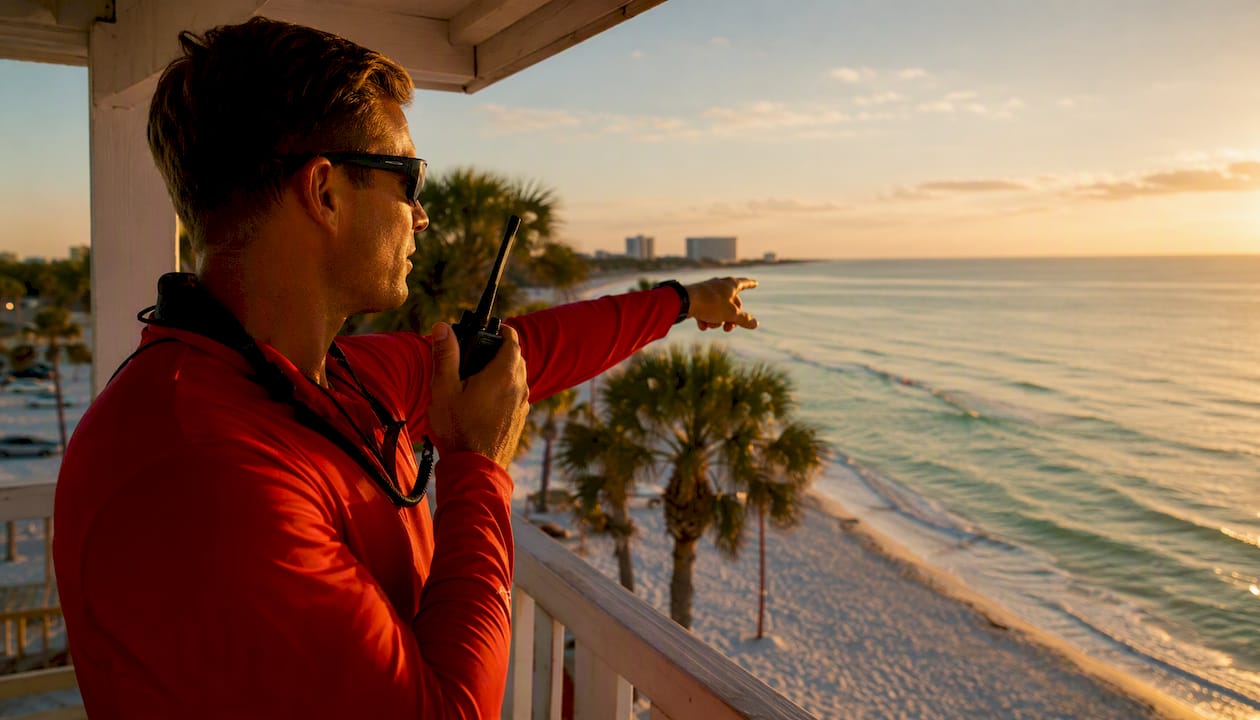
Flag poles are placed at public beach access points spaced approximately one mile apart along the coastline. When you arrive at your access point, the flag pole is the first thing to locate. If you cannot see one from where you are standing, walk toward the nearest public access ramp or boardwalk.
A few things to keep in mind about flag status:
-
Conditions can change during the day, and flags are updated when they do. A green or yellow morning can shift to red by afternoon if a storm system moves in.
-
The absence of a flag at your spot does not mean the water is safe. It may mean you are between access points.
-
Rip currents are the primary hazard driving flag decisions, and they are invisible from the surface. A flat, glassy patch of water between breaking waves is often a rip channel.
How to check the current flag status before you hit the beach
You have several fast, reliable options for checking today’s ocean condition flags before you leave your rental or hotel.
-
Text PCBFLAGS to 888777. This is the city’s official alert system. You will receive a text message whenever flag conditions change, so you are not guessing when you arrive.
-
Visit the official city flag page at pcbfl.gov. The City of Panama City Beach flag page posts current flag status and links to the downloadable flag key PDF.
-
Use the VisitPanamaCityBeach “Stay PCB Current” tools. The pcbeach.org site includes webcam feeds and condition updates so you can see the beach in real time from wherever you are.
-
Download the Stay PCB Current PDF. This city-prepared document includes flag definitions, safety tips, and the text-alert instructions in one printable page. It is worth keeping in your rental’s welcome packet.
-
Ask the nearest lifeguard or beach ambassador on-site. No app replaces a direct conversation with the person standing at your access point.
Pro Tip: Cross-check your text alert or webcam reading with the on-duty lifeguard when you arrive. Conditions near your specific access point can differ slightly from the general flag status posted online.
What to do when a flag warns of danger
If the water is rough (red or double-red conditions)
Stay out. If you are already in the water when conditions change, exit calmly and directly. Do not fight a rip current by swimming straight back to shore.
-
Float first. If a rip current pulls you away from shore, stay calm and float. Rip currents do not pull you under; they pull you out.
-
Swim parallel to shore. Move sideways until you are out of the current’s pull, then angle back toward the beach at a diagonal.
-
Wave for help. If you cannot make it back, raise one arm and wave to signal a Surf Rescue Specialist. Do not exhaust yourself trying to fight the current alone.
-
Do not attempt an untrained rescue. If you see someone in trouble, call or wave for a lifeguard immediately. Untrained rescuers frequently become victims themselves.
If a purple flag is flying
Get out of the water carefully and check your body for stings. Look for posted warnings near the access point about the specific marine life present. For jellyfish stings, rinse with seawater (not fresh water), remove any tentacles without rubbing, and seek medical attention if the reaction is severe or covers a large area.
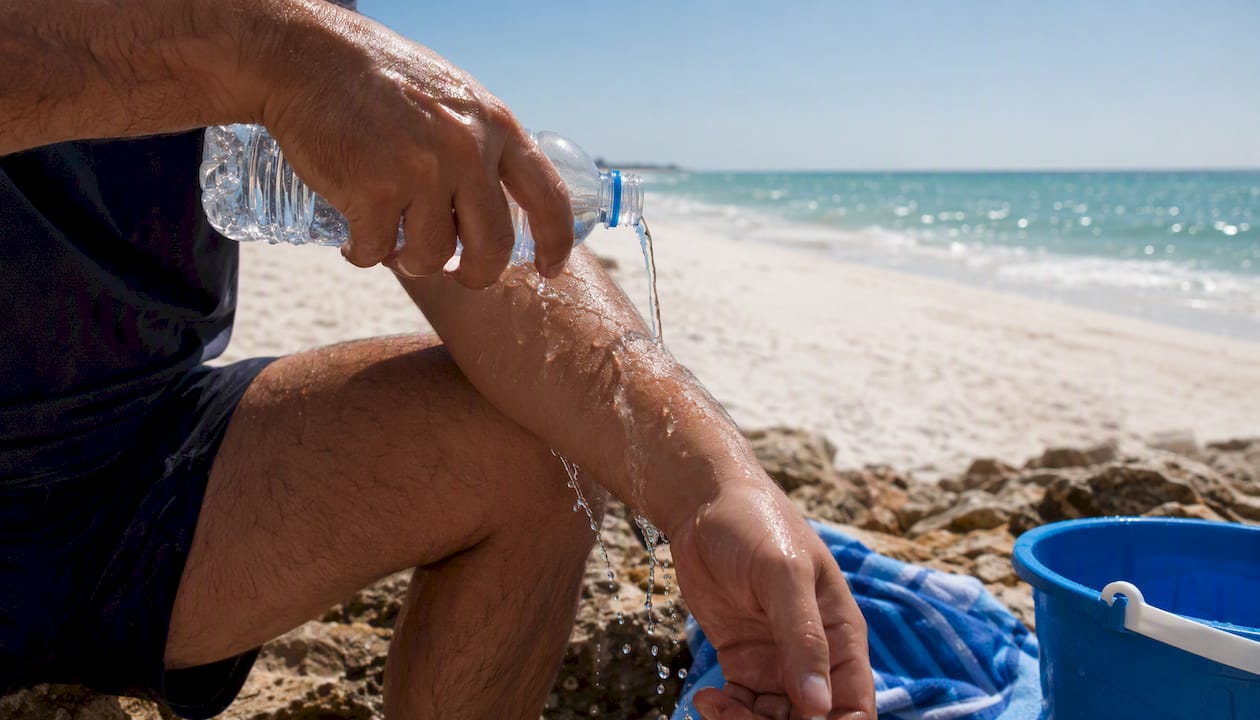
Pro Tip: On yellow-flag days, put a life jacket on children and any adult who is not a strong swimmer before entering the water. The Gulf’s currents are deceptively strong even in moderate conditions.
Lifeguard roles, enforcement, and fines at Panama City Beach
Panama City Beach Fire Rescue operates the Surf Rescue Specialist program across the beach. These are trained water-safety professionals, not just flag monitors. They conduct rescues, issue citations, and coordinate with Bay County emergency services.
| Situation | Who to Contact | How |
|---|---|---|
| Someone in the water needs rescue | Surf Rescue Specialist / lifeguard | Wave both arms or call 911 |
| Double-red violation citation | Panama City Beach Fire Rescue | Officers on patrol issue on-site |
| Report unsafe beach conditions | City of Panama City Beach | Call non-emergency line or flag down patrol |
Enforcement has real teeth. The city can issue fines immediately for double-red violations without a prior warning, provided the person had reasonable access to the posted flag. A first offense costs $500; a second offense costs $1,000. Local reporting confirms that more than 100 people were cited for double-red violations in 2026, a significant increase from prior years.
Beach Safety Director Daryl Paul and Panama City Beach Fire Rescue have been direct: double-red flags are safety directives tied to rip-current risk, not weather advisories you can weigh against your own comfort level.
What the ambassador program and stricter enforcement mean for your visit
The Panama City Beach City Council approved changes in 2026 that allow immediate fines for double-red violations and launched a beach ambassador program designed to put more educated, visible personnel on the sand. The ambassador concept trains beach vendors and on-site staff to remind visitors about flag meanings and direct them toward lifeguarded areas.
What this means for you practically:
-
You are more likely to be approached by an ambassador or patrol officer on a double-red day than in previous years.
-
Vendors and rental operators near the beach are being encouraged to brief guests on flag rules before they head to the water.
-
Public rescue tubes are being added at more access points as part of the safety infrastructure push.
Pro Tip: When you arrive at your access point, ask the nearest Surf Rescue Specialist or ambassador exactly where the lifeguarded zone is. Stations shift seasonally, and knowing the closest one before you need it is the smartest preparation you can make.
Planning a safe and enjoyable stay near the beach
When you are ready to book your trip, Panamacitybeachflorida’s vacation rentals include beachfront condos and homes positioned near public beach access points with lifeguard coverage. Staying close to a staffed access point means shorter walks to the flag pole and faster access to Surf Rescue Specialists when conditions change.
If flags keep you out of the water on a given day, there are plenty of things to do in Panama City Beach beyond swimming, from paddleboarding in calmer bay waters to waterfront dining and parasailing.
The flag system works — but only if you actually look up
Most beach injuries at PCB happen not because visitors ignored the flags, but because they never checked them in the first place. That is the gap this system is designed to close, and the 2026 enforcement push is a direct response to it.
The conventional advice to “be careful in the ocean” is too vague to be useful. What actually protects you is a specific habit: check the flag at your access point before you enter the water, every single time, even on sunny days when the Gulf looks inviting. Rip currents do not care how calm the surface looks, and neither does a $500 citation.
The text alert system is underused. Signing up takes thirty seconds and gives you real-time updates without having to open an app or visit a website. If you are traveling with children or anyone who is not a strong swimmer, that thirty seconds is the most valuable safety investment you will make before your trip.
One more thing the standard guides skip: the purple flag is not a minor footnote. Jellyfish blooms in the Gulf can be dense enough to make swimming genuinely painful, and stingray encounters in shallow water are common in summer months. When purple is flying alongside red or yellow, treat it as an additive risk, not a separate, lesser concern.
Sources
-
Panama City Beach is cracking down on swimming under double red flags
-
Panama City Beach implements strict double red flag policy to improve water safety
FAQ
Is there a beach flag flying at Panama City Beach today?
Flag status changes daily and sometimes within the same day. Check the City of Panama City Beach flag page or text PCBFLAGS to 888777 for the current flag color at your access point.
What do the flag colors mean at Panama City Beach?
Double red means the water is closed to the public; single red means high hazard; yellow means medium hazard; green means low hazard; and purple means dangerous marine life is present. Purple can fly at the same time as any other flag.
How do I check the current beach flag status?
Text PCBFLAGS to 888777 for real-time alerts, visit pcbfl.gov for the official flag page, or use the VisitPanamaCityBeach webcams at pcbeach.org. On-site, locate the flag pole at your nearest public beach access point.
What are the current water conditions at Panama City Beach?
Conditions vary daily based on rip-current strength and surf hazards assessed by Surf Rescue Specialists each morning. The fastest way to get today’s reading is the text alert system or the official city flag page.
Can you get fined for swimming under a double-red flag?
Yes. Panama City Beach can issue an immediate citation for entering the water during double-red conditions: $500 for a first offense and $1,000 for a second offense under city ordinance.
Recommended
-
Panama City Beach Vacation Rentals | Beachfront Condos & Homes
-
Panama City Beach Vacation Rentals | Homes, Condos, Things To Do
About the Author
Joe Godar of the PanamaCityBeachFlorida.com Editorial Team creates destination guides, vacation-planning resources, and local travel content focused on Panama City Beach, Florida.
Our team researches local beaches, vacation rental trends, family activities, restaurants, attractions, events, and direct-booking best practices. Every guide is created to help travelers plan more confidently, experience the best of Panama City Beach, and avoid unnecessary third-party guest service fees.
PanamaCityBeachFlorida.com is part of the Emerald Coast by Owner marketing family, connecting travelers directly with verified vacation rental hosts throughout the Gulf Coast since 2016.
This article was reviewed for accuracy and updated using local destination research and current Panama City Beach vacation rental market insights.